
$18.8m REWARD Project Launched to Boost Ghana's Rice Production
The Ministry of Food and Agriculture has launched an $18.8 million AfDB-backed rice project expected to benefit 20,000 smallholder farmers in seven northern districts, as Ghana targets rice self-sufficiency by 2028.
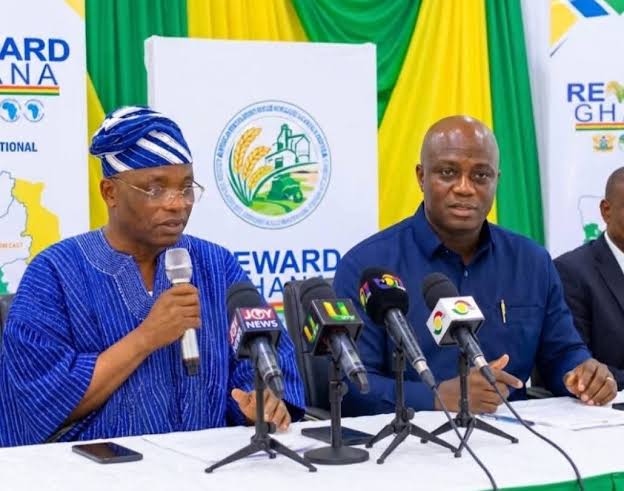
Ghana has begun an $18.8 million project aimed at raising local rice output and cutting the import bill, with the government targeting rice self-sufficiency by 2028, as first reported by Graphic Online.
The Regional West Africa Resilient Rice Value Chains Development Project, known as REWARD, will run for five years. It is expected to support 20,000 smallholder farmers with better seeds, modern machinery and investment in processing facilities.
The Ministry of Food and Agriculture (MoFA) is implementing the project, which is funded through a grant from the African Development Bank (AfDB).
Where the Project Will Run
Seven districts in four regions will benefit. In the Northern Region, these are the Tamale metropolis, as well as Savelugu municipality and Mion district. The others are Mamprugu-Moagduri district in the North East Region, West Gonja district in the Savannah Region, and Wa municipality and Nandom district in the Upper West Region.
Also read: Baah Agyemang to Seek NPP Ticket for Asante Akyem North Seat
Speaking at the launch in Tamale last Monday, Food and Agriculture Minister Eric Opoku said women and young people were among the farmers who would benefit directly. He said 3,200 hectares in the Northern Savannah Ecological Zone would be developed for rice cultivation, and that chosen seed centres and processing facilities would be equipped.
Equipment to be provided includes mini crawler combine harvesters, rotary tillers, rice transplanters, seed drills and boom sprayers. Processing facilities are also to receive destoners, colour sorters and better parboiling vessels, which the minister said would raise the quality and competitiveness of local rice.
He called on beneficiaries to use and maintain the machinery properly, noting that operators would need training and that access arrangements should be transparent.
Reducing Imports
According to Mr Opoku, Ghana currently meets about 56 per cent of its rice needs, importing the remaining 44 per cent at an estimated annual cost of $500 million. He said domestic milled rice output reached 960,000 tonnes in 2025, up from 685,000 tonnes in 2022, but production must grow further to meet the 2028 goal, which comes with a national paddy rice target of 3.31 million tonnes.
“Our ambition is to progressively reduce this import dependence by expanding domestic production, improving productivity, strengthening processing capacity and ensuring that locally produced rice can compete favourably in quality, availability and price,” he said.
The minister described REWARD as a key part of the government's Feed Ghana Programme. The project is also intended to build stronger connections between farmers and processors on one side and aggregators, distributors and institutional buyers on the other, to widen market access.
Dr Damian Ihedioha, Manager of the AfDB's Agriculture and Agro-Industry Department, said the project would help tackle weak productivity, poor access to modern machinery and insufficient processing capacity in the rice sector. He added that it would help farmers obtain good-quality seeds, technology and markets, and open opportunities for women and young people.
Northern Regional Minister Ali Adolf John welcomed the initiative, saying it would strengthen agriculture and generate economic opportunities in the region. He said an efficient rice value chain would spread the gains from higher production beyond farmers to traders, processors and other businesses.
Source: GRAPHIC ONLINE. This story was prepared with the help of AI from that reporting, and checked by our editors.



Comments
Sign in to join the conversation.