
Gold Fields Ghana Marks Two Decades of Growth Since 1992 Entry
Gold Fields Ghana’s Managing Director Elliot Twum recounts the company’s 1992 entry, investments and lease renewal ahead of 2027 expiry.
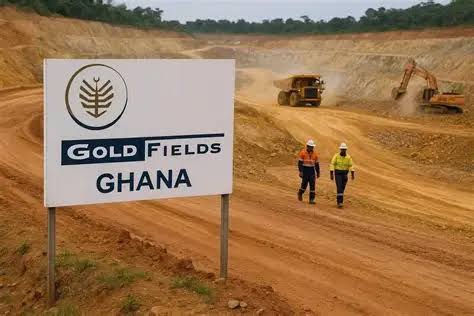
Gold Fields Ghana Limited entered the country in 1992 to help revive a struggling mining sector, according to Senior Vice President and Managing Director Elliot Twum. He told Channel One TV’s The Point of View that the firm was chosen as a preferred partner to take over the then‑state‑owned Tarkwa Gold Mine, an underground operation producing roughly 12,000 ounces of gold a year.
Twum said Gold Fields made an initial payment of $3 million for the underground mine and spent about five years operating it while conducting surface prospecting, drilling and resource definition studies. Those efforts culminated in the launch of a heap‑leach operation in 1998, for which the company invested more than $50 million.
"Gold Fields was invited into Ghana in 1992 by the then administration to try and resuscitate the dying mining industry in Ghana," Twum said. "Gold Fields was appointed as a preferred partner to take over the then Tarkwa Gold Mine, which was one of the operations of the state’s gold mining corporation. It was a small underground operation producing up to about 12,000 ounces a year."
The five leases issued in 1997 for the heap‑leach operation are due to expire in April 2027, and Gold Fields is seeking their renewal. Since the early years, the company has expanded its footprint, acquiring the northern tenement of the former Teberebie Gold Mine in 2000 and the Aboso Mine – now called Damang – from Australian firm Rangers in 2002.
Also read: CAS to Release Decision on Senegal AFCON Title Appeal on 24 November
In 2004, Gold Fields introduced a carbon‑in‑leach (CIL) plant at Tarkwa, later upgraded in 2008 and subsequently expanded to process about 15 million tonnes of material annually. Twum explained that Tarkwa’s low‑grade but consistent deposit requires moving large volumes of rock: "We move about 100 million tonnes of material every year. Just about 10 million tonnes of that is ore. The 90 million tonnes goes to waste," he said.
He contrasted this with the higher‑grade, hydrothermal deposit at Damang, which demands closer‑spaced drilling. According to Twum, the transformation of Tarkwa from a modest underground mine into a large‑scale operation was driven by substantial investment in infrastructure, equipment and technology, alongside government support that covered salaries, suppliers and reagents during early challenges.
Today, Gold Fields produces an average of roughly 500,000 ounces of gold annually at Tarkwa and is preparing to renew its mine leases before they lapse in 2027. The company’s long‑term presence reflects its role in reshaping Ghana’s gold mining landscape since its 1992 entry, as first reported by Citi News.
Source: Citi News. This story was prepared with the help of AI from that reporting, and checked by our editors.


Comments
Sign in to join the conversation.