
Vice-President Urges Women Entrepreneurs to Scale Up at GWES 2026
Vice-President Professor Jane Naana Opoku-Agyemang used the opening of the 5th Ghana Women Entrepreneurship Summit to call for women-owned firms to move into manufacturing and industrial supply chains, while GEA chief Margaret Ansei highlighted cash-flow pressures.
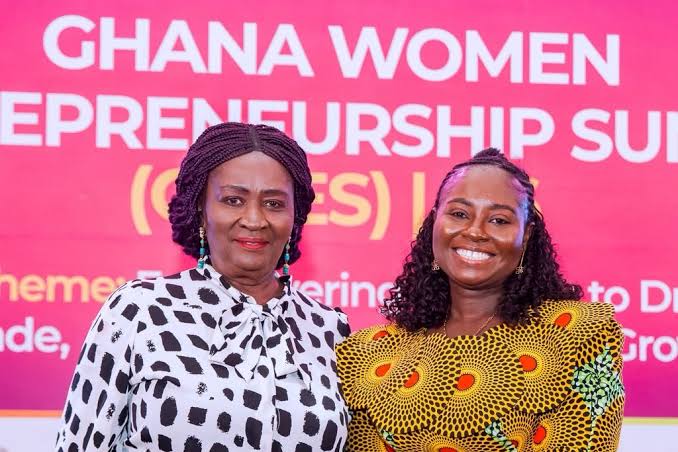
Vice-President Professor Jane Naana Opoku-Agyemang has called for women-owned businesses in Ghana to grow beyond small-scale trading and into factories, manufacturing and industrial supply chains.
She was speaking at the opening of the 5th Ghana Women Entrepreneurship Summit (GWES 2026), where she was joined by Ms Margaret Ansei, Chief Executive Officer of the Ghana Enterprises Agency (GEA), as first reported by Citi News.
The summit's theme was "Empowering Women to Drive Trade, Innovation and Industrial Growth." It gathered government officials, development partners, financial institutions, industry leaders and women entrepreneurs to discuss ways to deepen women's involvement in business, trade and industry.
In her address, the Vice-President restated the government's commitment to supporting women in business through better access to finance, business development services and wider markets. She linked women's enterprise directly to the country's wider economic plans.
Also read: Baah Agyemang to Seek NPP Ticket for Asante Akyem North Seat
"Ghana's economic transformation depends on increasing production, processing more of what we grow, and building stronger links between local enterprises and larger industries. Women are central to this effort," she said.
Professor Opoku-Agyemang said women should have the chance to set up factories, expand their firms and compete both at home and abroad. She pointed to the proposed Ghana Women's Development Bank as a major government measure intended to tackle the long-standing difficulty women face in obtaining affordable credit.
However, she noted that money alone would not be enough. According to the Vice-President, women-led firms also need skills, quality standards, good packaging, safety compliance and market openings if they are to meet the demands of large buyers, supermarkets and export markets. She said building their capacity in productive sectors would help create jobs and support industrial growth.
In her welcome address, Ms Ansei appealed for stronger institutional backing, cheaper financing and better market access for women-led enterprises.
She focused on the strain that working capital shortages place on women entrepreneurs, particularly when they try to deliver large orders. According to the GEA chief, many such businesses find it hard to complete big contracts because buyers typically pay over long periods, while suppliers expect to be paid straight away.
This gap, she explained, leaves firms short of cash and limits their ability to increase output, fulfil orders and seize new opportunities.
Ms Ansei urged banks and business support bodies to design financing products that better match how women-led enterprises actually operate. She also called for closer cooperation between institutions and stronger market linkages to make these businesses more competitive and sustainable.
The GEA, which is mandated to promote micro, small and medium enterprises (MSMEs), said it would keep working with partners to widen opportunities for women entrepreneurs and strengthen their capacity to contribute to trade, innovation and industrialisation in Ghana.
Source: Citi News. This story was prepared with the help of AI from that reporting, and checked by our editors.



Comments
Sign in to join the conversation.